

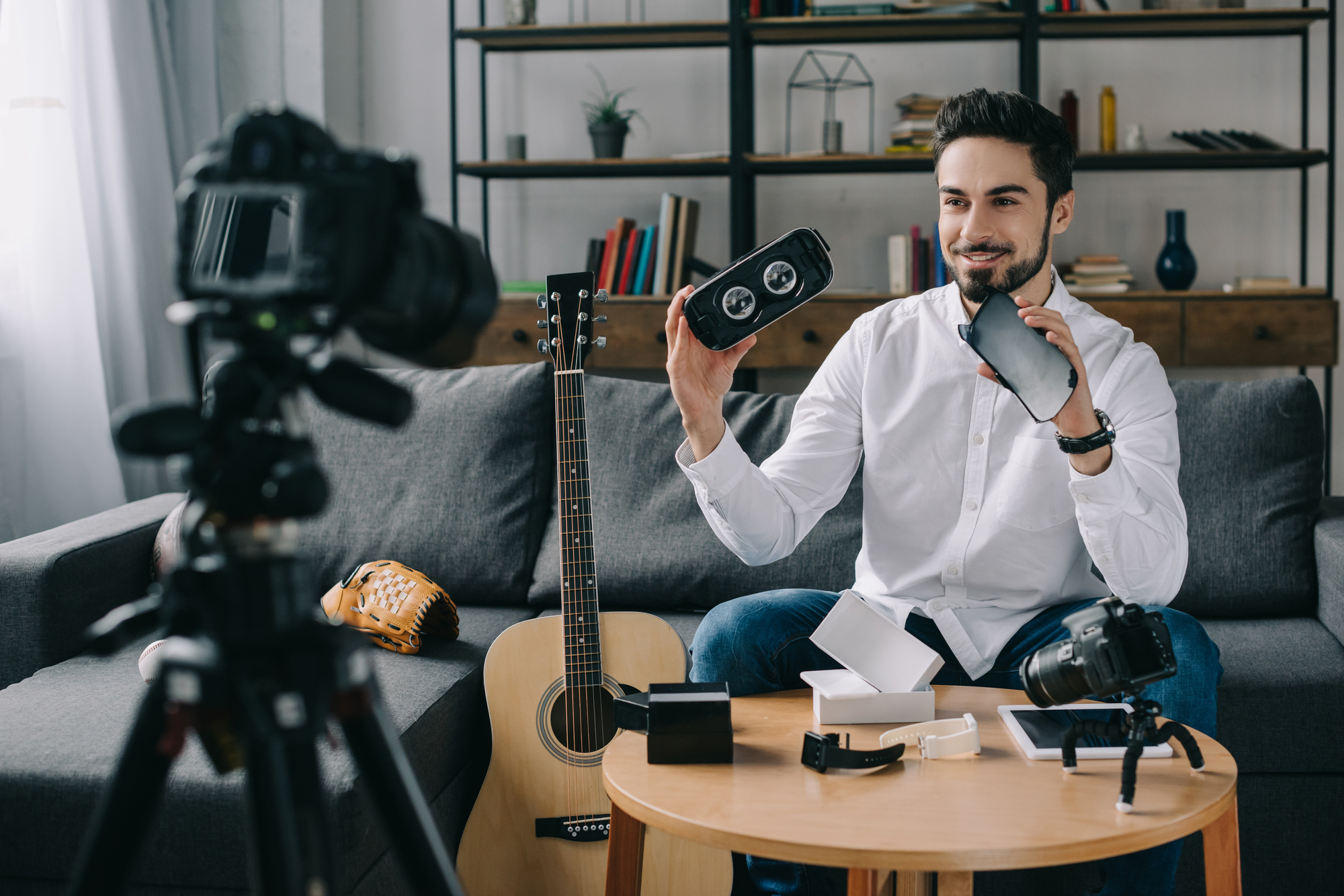
The Best Equipment for Vlogging in 2020: The Complete Checklist
Celebrity vloggers ranging from gamers to beauty gurus can earn as much as $1 million per month. But with such diverse content, what do they have in common?
One thing – perhaps the most important – is high-quality videos.
Whether you’re an aspiring vlogger who’s just starting out, and looking to invest in the right gear. Or maybe you’ve already got a YouTube channel and some subscribers under your belt, and you’re looking to upgrade your existing equipment to something with a little higher quality.
Either way, today’s viewers are accustomed to – and demand – high-quality footage. Anything less than sharp images and crisp audio is a distraction from your content, and viewers won’t stick around.
So what is the best equipment for vlogging? Which brands and models should you opt for?
Read on to find out what gear you really need to take your vlog to the next level.
Contents
What Is the Best Equipment for Vlogging?
Here we’re going to break down each category of vlogging equipment and bring you the best picks for 2020. Lights, camera, action!
Camera
First things first, every prospective vlogger needs a great camera. A common misconception is that you need to spend a lot of money to guarantee superior video quality, but this simply isn’t true.
Of course, much depends on the kind of content you’ll be filming. Some bloggers can make do with their smartphone camera or a GoPro.
Others will need something a little more technical, however.
You might want to opt for a camcorder. These are great for recording video, but aren’t so adept at photography if you’re looking for some versatile equipment. What’s more, in certain conditions such as low-lighting, they can result in grainy footage.
Otherwise, you could go for a DSLR. These can be used for photography as well as videos, and offer both a viewfinder and a screen so you can watch what you’re filming, as you film it. Panasonic, Canon, and Sony all offer decent DSLR options.
A DSLR is of course going to be more expensive than using the smartphone that you already own. But this is what’s going to give your vlog that professional look.
Microphone
Next, let’s take a look at microphones.
Almost all cameras will come with a built-in microphone, however, very often isn’t going to cut it. Sub-par audio is a surefire way to distract, and repel, viewers.
The first option is a DSLR microphone. These are a great choice because they simply mount on top of your DSLR (or mirrorless) camera, so are easy to use. What’s more, they pick up only the sound that you actually want to record – e.g. whatever the microphone is facing.
Some recommended models for a DSLR microphone are the Rode VideoMic Pro, the Sennheiser MKK400, and the Azden SMX-10.
Other types of microphones include lavalier and USB microphones. The lavalier mic captures great quality audio but has limited usage and a complicated set-up. These days, vloggers tend to shun the ‘unfashionable’ look of a microphone clipped to a shirt below the speaker’s mouth.
As for USB microphones, these are well suited to voice-over work. If you’re sat at your desk, and need to record audio without video (they’re a bit of an eyesore!), this could be the best option for you.
Tripod
Now, let’s turn to tripods.
Tripods are essential to avoiding shaky video footage. Unless you’re selecting this style intentionally, perhaps as part of a “day in the life” vlog, shaky camera work is to be avoided at all costs!
Tripods come in different sizes, and beware that the smaller models won’t be a good match for larger camera lenses. The tripod you choose will be determined by the camera model you go for.
The support you require also depends on the kind of vlogging you want to do. If you’ll be based in one primary, indoor location, the Magnus VT-4000 might be a good option.
However, if you’re an on-the-go vlogger, you might need something more lightweight.
GorillaPod is a popular brand of tripods, especially for travel-vlogging, as they are extremely portable and flexible. They can attach to just about anything, and the smaller models can double up as a selfie-stick.
Software
Of course, once you’ve shot your footage, the work isn’t over. Next, you’ll need an editing program to put together what you’ve filmed.
Computers often come with free editing software already installed, however, if you’re serious about vlogging, you’ll need to invest in a more advanced program.
There are different options when it comes to paying a one-off fee to use the software, or a monthly fee that rolls over. Also, sometimes editing software is Windows- or Mac-specific.
A few popular options include Final Cut Pro X by Apple, Adobe Premiere Pro, and Vegas Movie Studio. The best option for you will depend on your budget and existing hardware.
However, you can rest easy knowing that although it might take some time getting to grips with these programs, there are hundreds of tutorial videos available on YouTube.
Lighting
Finally, let’s take a look at lighting.
Much like the other categories we’ve looked at, the best lighting option for you is going to depend on the style of vlogging you’re in to. In fact, for many vlogging categories out there, you may not need to invest in any lighting products at all.
However, a couple of good options for keeping a subject well-lit in indoor settings are ring lights and soft-light kits. These are great versatile lighting options, with ring lights being on the cheaper end of the scale.
While these are examples of more basic vlogging lighting equipment, if you’re going to be incorporating a green screen into your videos, you will of course need something more technical. The key is ensuring a consistent light across the frame.
Litepanels and Kino are two recommended brands for this more advanced lighting technique.
Which Are the Best Products for Me?
Now you know our picks for the best equipment for vlogging in 2020.
We’ve covered everything from camcorder vs DSLR, to the best shotgun microphones, and you should have a good idea of what vlogging gear you need to get started and to ensure high-quality content.
If you found this post helpful, be sure to check out our other articles!
Comments are closed.